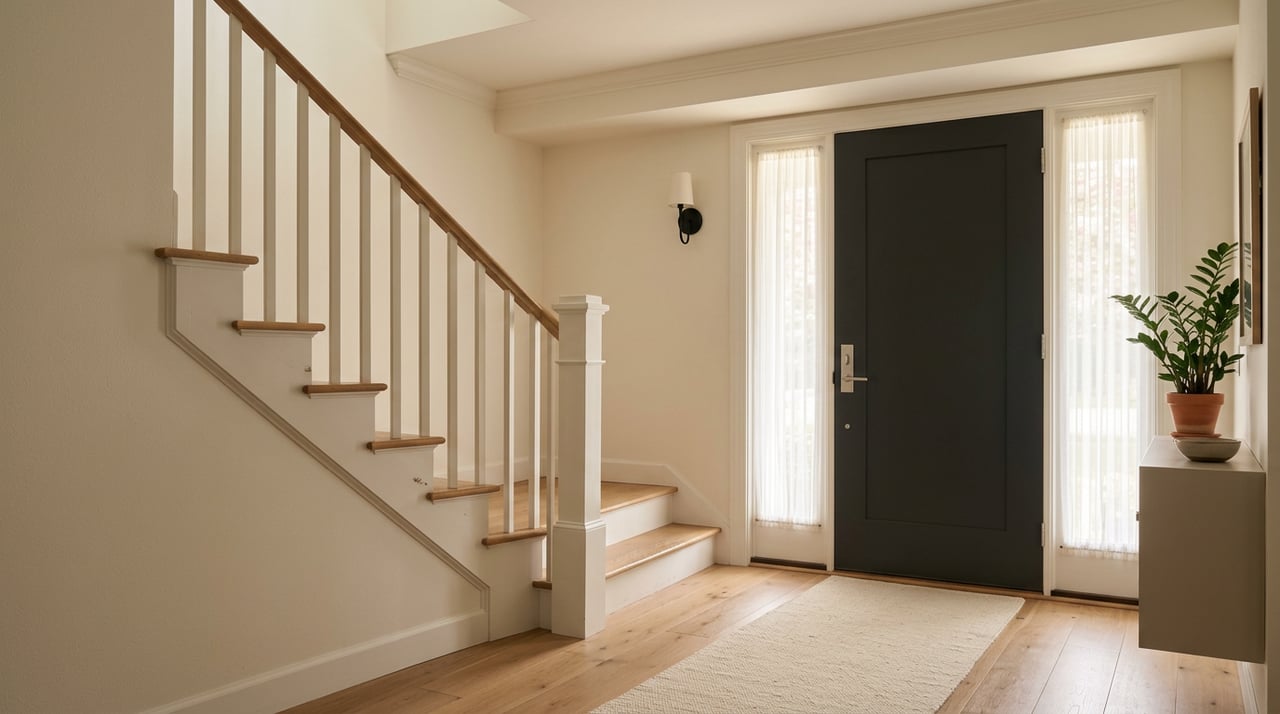
Most sellers in Sewell prepare for closing the way they'd prepare for closing anywhere else in South Jersey. They line up an attorney, order a home inspection response, and assume the municipal paperwork will sort itself out in the two weeks before settlement. Then the resale CO gets flagged, the county septic reviewer asks for an MUA waiver nobody mentioned, and the calendar quietly gives up a week.
The friction in a Sewell sale isn't the inspection itself. It's that Washington Township runs one clock and Gloucester County runs another, and the second one can't start until a third office signs off.
That's the thing to understand before you list. Everything below is evidence for it.
Sewell Is Washington Township, And Washington Township Requires A Resale CO
New Jersey doesn't have a statewide resale certificate of occupancy rule. Each municipality writes its own, which is why sellers who moved within Gloucester County a few years ago sometimes assume the process is the same everywhere. It isn't. Neighboring Gloucester Township explicitly does not require a resale CO from its construction office. Washington Township does, under Chapter 179 Article V of its code, and the ordinance language is unambiguous: a certificate of occupancy is required for human habitation of all existing dwelling units before a change in ownership can be effected.
Practically, that means the seller books a resale inspection with the Washington Township Housing Office at 523 Egg Harbor Road, pays $70, and waits for an inspector. The township's own FAQ tells you to schedule this at least three weeks before settlement. That instruction exists because of what happens when you don't.
What The Inspector Is Actually Looking For
This is not a home inspection. It's a health-and-safety walkthrough tied to the International Property Maintenance Code. The scope is narrow and predictable:
- Smoke and carbon monoxide alarms in the required locations, with working batteries
- Handrails and guards on stairs and elevated surfaces
- House numbers plainly visible from the street, minimum four inches high
- Windows and doors that open and stay open on their own
- Electric, water, and gas on at the time of inspection, which matters if the home is vacant
A resale inspection isn't cosmetic and it isn't a code compliance audit. What it is, however, is a permit check. Before the inspector even walks the property, the office pulls the permit history, and any open or missing permit becomes a blocker. Additions, finished basements, decks, water heaters, HVAC swaps, roof replacements. If a prior owner did the work without pulling a permit, the CO won't issue until that work is reconciled with the Construction Office.
That reconciliation is the delay most sellers underestimate. A missing permit for a finished basement isn't a phone call. It's an as-built inspection, potentially by multiple sub-code officials, sometimes with an engineer's letter.
The Two Clocks Sellers Discover At The Wrong Time
Here is where the Sewell process diverges from the rest of Gloucester County in a way that matters.
Clock one: the CO clock. Once your completed application and $70 fee are in, the Housing Inspector has ten working days to inspect and either issue the CO or send a written violation list. If you fail, the first reinspection is free. Each reinspection after that runs $50. Repairs, scheduling, reinspection. That cycle is the one everyone plans for.
Clock two: the septic/well transfer clock. Sewell is largely on public water and sewer, but Washington Township has real pockets, especially on the western and southern edges, still served by private well and septic. If your home is one of them, Gloucester County Board of Health has to sign off on the transfer independently of the CO. And Gloucester County's own submission page states plainly that Washington Township is one of the towns where the MUA requires a waiver be obtained from them before the county will process the septic paperwork.
Read that again. The county won't start its review until the Washington Township MUA signs a waiver acknowledging the property is staying on private well and septic and doesn't need to connect to the utility. That waiver is a separate application to a separate office. Then the real estate transfer inspection follows the state protocol at N.J.A.C. 7:9A-12.6, plus a Private Well Testing Act sample from an NJDEP-certified lab analyzing the full PWTA parameter list, with both buyer and seller signing off on the results before closing.
Two clocks. They don't run in sequence. They run in parallel, but the second one has a starter's gun the first one doesn't.
What A Realistic Sewell Timeline Looks Like
For a public-sewer home in Sewell with clean permits, plan roughly this way:
- Six weeks before settlement: Confirm with the Housing Office that no permits are open on the property. This is a five-minute call that avoids the two-week problem later.
- Four weeks before settlement: Submit the resale inspection application and the $70 fee.
- Three weeks before settlement: Inspection occurs. Address any violations immediately.
- Two weeks before settlement: First reinspection if needed.
- One week before settlement: CO in hand, or the buyer signs the notarized Temporary CO affidavit that lets the sale close with post-closing repairs.
For a well-and-septic home, add three to four weeks to the front of that timeline for the MUA waiver, the septic inspection under the state protocol, and the PWTA water sample turnaround. The Gloucester County real estate septic review update fee alone is $200 on top of the inspector's cost.
The Temporary CO Is A Tool, Not A Fallback
Washington Township allows a Temporary CO when repairs can't be finished before closing, but only if the buyer submits a notarized affidavit accepting responsibility for those repairs. The seller doesn't get to invoke it unilaterally. It's a negotiation.
The moment a buyer learns that the seller is asking them to sign an affidavit taking on unfinished code items, two things happen. Their attorney slows down. Their inspector re-reads their own report with a new question in mind. A tool designed to keep the closing on track often becomes the reason a buyer asks for a price reduction. Sellers who use the Temporary CO as a plan, not a fallback, price it into the deal at the listing stage. Sellers who back into it in the final week rarely get the same result.
How Sewell Compares To The Rest Of Gloucester County
| Municipality | Resale CO Required | Fee | Reinspection |
|---|---|---|---|
| Washington Township (Sewell) | Yes, under Chapter 179 | $70 | First free, $50 after |
| Gloucester Township | No CO from construction office | Fire smoke cert only | N/A |
| West Deptford | Yes, resale housing CO | $60 inspection plus $40 fire cert | $30 housing, $20 fire |
That table is the answer to the most common seller mistake in Sewell: assuming your last Gloucester County sale set the template for this one. It didn't.
What This Means If You're Listing In Sewell This Fall
A 45-to-52-day contract-to-close window is the South Jersey norm. In Sewell, that window has less slack than it looks. If you're on public utilities and your permit history is clean, the CO clock fits. If you're on well and septic, or if a prior owner finished a basement without paperwork, the window is already tight before the buyer's home inspector shows up.
The sellers who avoid the week-late closing do three things before the sign goes in the yard. They pull the permit history. They confirm which utilities serve the property and whether an MUA waiver applies. And they price the timeline into the marketing plan rather than the last two weeks of the deal.
FAQ
Does every home in Sewell need the MUA waiver? No. Only homes on private well or septic that need Gloucester County Board of Health review for the transfer. Public-sewer homes skip this step entirely. If you don't know which category your home is in, the water bill and the presence or absence of a septic tank on your property survey answer the question.
Can the buyer sign for the CO instead of the seller? The ordinance allows the buyer to assume the seller's CO responsibility in writing, but only with a Temporary CO that carries a 90-day compliance window. It's a real option in certain deals, particularly investor purchases, but it isn't a workaround for a home with a difficult permit history.
What happens if the inspector finds work done without a permit? The CO won't issue until the work is reconciled with the Construction Office. Depending on what the work was, that can mean an as-built inspection, retroactive permit fees, or, in rarer cases, remediation. Every one of those steps has its own scheduling window.
If you're thinking about listing in Sewell this fall or winter, the value of a local plan is measured in days at the closing table, not in a listing brochure. Jennifer Ferrara works Washington Township closings weekly and builds the CO clock, the utility question, and the permit review into the listing strategy before the sign goes up. When speed and certainty matter, that groundwork is the difference between a smooth 45-day close and a stressful 55-day one. Get Your Free Home Valuation and we'll walk you through what your specific address will need before it hits the market.